
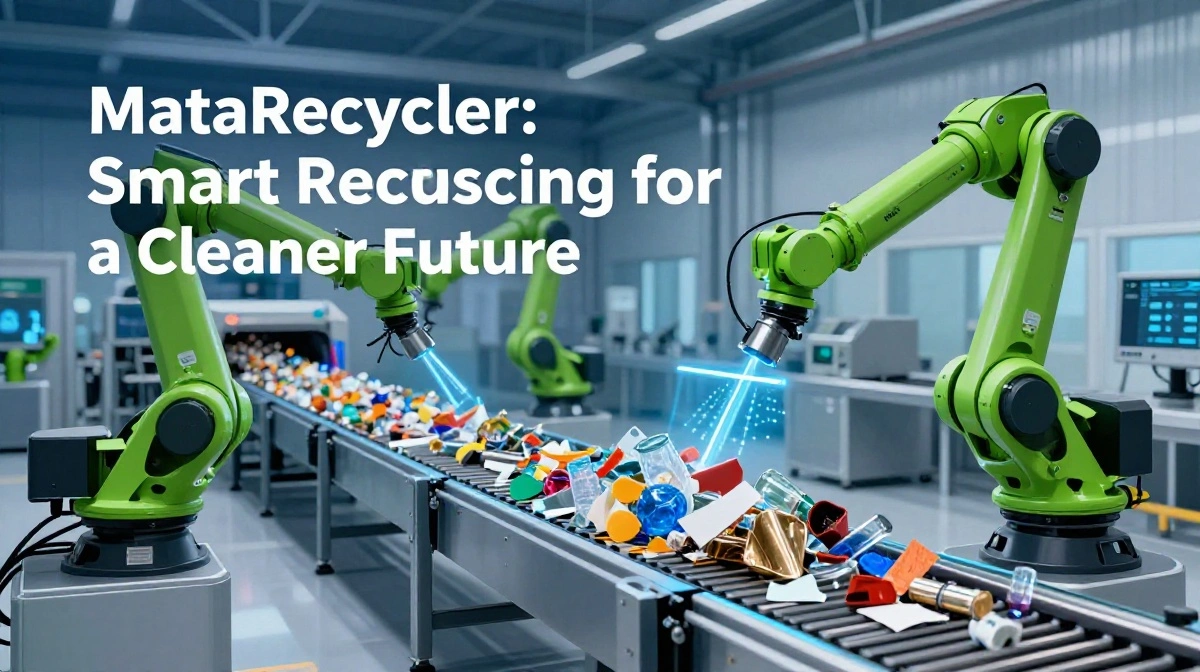
Recycling has always sounded simple on paper — sort your trash, toss it in the bin, done. But anyone who’s actually tried knows the reality is messier. Wrong materials contaminate entire loads. Bins overflow before trucks arrive. Communities recycle less than they think. MataRecycler was built to fix exactly these problems.
This AI-powered smart recycling system uses machine learning, computer vision, and real-time sensors to take the guesswork out of waste management. Whether you’re a homeowner frustrated by confusing sorting rules, a business trying to cut disposal costs, or a city looking to hit sustainability targets, MataRecycler offers a practical, technology-driven path forward. Here’s what you need to know.
What Is MataRecycler and How Does It Work
MataRecycler is an intelligent recycling platform that combines artificial intelligence, advanced sensors, and cloud-based data analytics to automate the entire waste sorting process. The system uses computer vision and machine learning algorithms to identify materials — plastics, metals, paper, glass, and electronics — in seconds, analyzing each item by its shape, color, texture, and chemical composition.
Once identified, waste is directed into the correct recycling stream without human intervention. Smart sensors embedded in bins monitor fill levels continuously, sending automatic alerts when collection is needed.
All of this data flows into cloud dashboards accessible to facility managers, business owners, and city officials in real time. You don’t need technical expertise to benefit from MataRecycler. On the user-facing side, a simple mobile app guides individuals through proper sorting step by step.
The Accuracy Gap That Traditional Recycling Cannot Close
Here’s a number worth sitting with: traditional human sorters at recycling facilities typically achieve between 85% and 90% accuracy — and that’s on a good day, before fatigue sets in. MataRecycler’s AI-powered sorting system consistently hits accuracy rates above 95%, with specialized setups reaching 98%. That gap matters more than it sounds.
Contamination in kerbside recycling programs currently sits between 17% and 25%, according to industry data. When recyclable material is contaminated, entire batches get rejected and sent to landfills anyway, wasting the effort of every household that sorted carefully.
MataRecycler’s machine learning model doesn’t tire, doesn’t rush through a long shift, and keeps improving with every batch it processes. Cleaner inputs mean more usable outputs, and that translates directly into higher recycling rates for communities that adopt the technology.
Why America’s Waste Crisis Makes MataRecycler Urgent Right Now
The scale of America’s waste problem is staggering. The EPA reports that Americans generate roughly 292 million tons of solid waste every year — about 4.9 pounds per person per day. Of that, only around 32% is recycled or composted.
The rest goes to landfills or incineration. Globally, the World Bank estimates that just 13.5% of waste is recycled, with some lower-income regions sitting near zero. Traditional recycling infrastructure simply wasn’t designed to handle the volume and variety of modern waste.
MataRecycler steps into this gap with a scalable, technology-first approach that works at the neighborhood level and the city level simultaneously. With landfill tipping fees rising 3–4% each year, the financial argument for smarter recycling grows stronger every single year.
Real Environmental Wins That MataRecycler Delivers
The environmental math behind better recycling is striking. Recycled aluminum requires 95% less energy than producing new aluminum from raw ore. Every ton of recycled paper saves approximately 17 trees and 7,000 gallons of water.
Recycling a single ton of plastic conserves the energy equivalent of 1,000 to 2,000 gallons of gasoline. The EPA has estimated that recycling and composting in the U.S. prevented roughly 186 million metric tons of CO2-equivalent emissions in 2018 alone — comparable to removing 39 million cars from the road for a full year.
MataRecycler amplifies every one of these outcomes by ensuring that more material actually makes it through the recycling process correctly. Higher sorting accuracy means fewer rejected loads, fewer wasted resources, and a measurably smaller carbon footprint for every community using the system.
How MataRecycler Benefits Businesses Beyond Just Going Green
Sustainability is good PR, but MataRecycler’s business case goes well beyond reputation. Companies that implement smart recycling programs have reported cutting their landfill disposal costs by 40–60%, according to industry case studies.
Instead of paying rising tipping fees to throw waste away, businesses can sell properly sorted materials back into supply chains, converting a cost center into a modest revenue stream. MataRecycler also delivers precise waste tracking data, which is increasingly valuable for ESG reporting and corporate sustainability disclosures.
Offices, retail spaces, manufacturing facilities, and commercial buildings all generate significant volumes of waste with real recyclable value locked inside. The system helps businesses recover that value rather than paying to bury it. For companies facing tightening environmental regulations, MataRecycler also supports compliance documentation automatically.
Smart Cities Are Already Proving the MataRecycler Model Works
The technology isn’t theoretical — cities and facilities worldwide are reporting measurable results. One neighborhood tracked a 40% increase in monthly recyclable materials collected after adopting the MataRecycler system.
A European city used the platform’s real-time feedback tools to streamline collection routes and educate residents on proper disposal, driving significant improvements in recycling program efficiency. In San Francisco, an AI-driven recycling system produced a 30% increase in waste diverted from landfills within its first operational year.
Facilities managing seasonal demand spikes — like coastal tourist destinations seeing waste generation jump by 60% in peak months — have found that MataRecycler handles volume surges automatically without missing a beat. These aren’t pilot programs. They are working systems producing verifiable, reproducible results in real communities with real waste streams.
Common Mistakes in Recycling That MataRecycler Eliminates
Most recycling errors aren’t intentional — people genuinely don’t know the rules, and the rules genuinely vary by location. Greasy pizza boxes, plastic bags, small metal bottle caps, and shredded paper are among the most common contaminants that derail entire recycling batches.
MataRecycler’s mobile app addresses this confusion directly, offering item-by-item guidance so users know exactly where each piece of waste belongs before it ever leaves their hands. On the facility side, the AI system catches misidentified materials that would slip past a tired human sorter.
Contamination rates drop dramatically when both ends of the process — the individual recycler and the processing facility — are working with the same intelligent tools. The result is a closed loop where mistakes become rare rather than routine, and recyclable materials actually complete the journey they were intended for.
What the MataRecycler Mobile App Means for Everyday Users
Technology is only as useful as it is accessible, and MataRecycler’s designers understood that from the start. The platform’s mobile app was built for everyone — kids figuring out sustainability for school projects, adults managing household waste, and seniors who want to do their part without decoding complicated local guidelines.
You snap a photo or search an item, and the app tells you exactly where it goes. It tracks your recycling history, sends reminders when collection days approach, and shows you the real environmental impact of your efforts in straightforward, motivating terms. That feedback loop matters.
When people see that their actions produce measurable results — “you helped divert 12 pounds of plastic this month” — they recycle more consistently. MataRecycler makes participation feel rewarding rather than confusing or burdensome.
Conclusion: MataRecycler and the Future of Waste Management in America
The recycling industry in the United States already supports 681,000 jobs and generates $37.8 billion in wages annually, according to EPA data. Every percentage point increase in national recycling rates creates more of those jobs, particularly in communities that need economic opportunity most.
MataRecycler represents the infrastructure upgrade that can drive those gains at scale. As AI-powered recycling technology matures — and a January 2026 market analysis found that computer vision now accounts for over 60% of the AI-powered recycling robot market — systems like MataRecycler will become standard rather than innovative.
For individuals, the takeaway is clear: using MataRecycler’s tools today means recycling correctly today, not someday. For cities and businesses, it means investing now in an infrastructure that pays environmental and financial dividends for decades to come.