
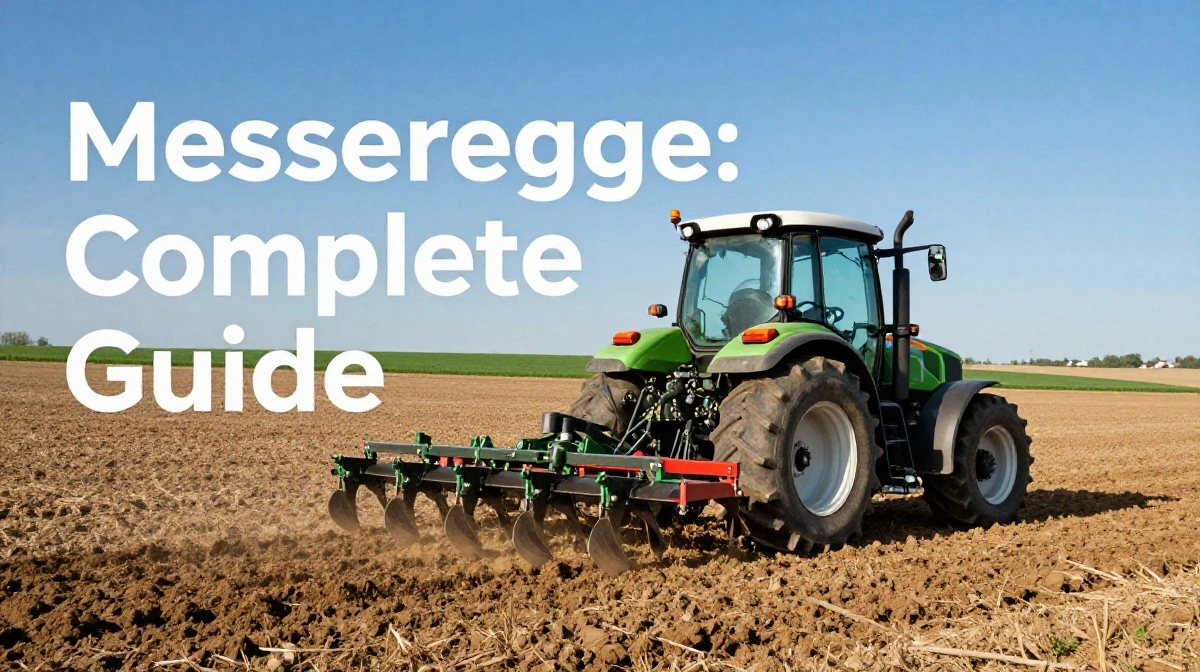
The event messerge is a term frequently encountered with no clear definition; many different industries make claims to it. That’s a fair reaction. The term carries genuine depth, rooted in German-language craftsmanship and agricultural tradition, yet it surfaces today in farming equipment catalogs, culinary heritage discussions, trade show design, and precision blade engineering.
This guide pulls all of those threads together. By the time you finish reading, you’ll understand not just what messeregge means, but why it matters — practically, historically, and in the context of modern professional use. This is an exhaustive answer that you could lay hands on — whether you are a farmer doing research on seedbed preparation, a designer plotting out an exibition architecture, or just an interested aimless reader.
What the Word Messeregge Actually Means
The term messeregge comes directly from the German language, and breaking it apart makes everything clear. “Messer” translates to knife, while “Egge” refers to a harrow — a farming implement used for shallow soil loosening and surface preparation.
Combined, the word literally describes a knife-shaped harrow or blade-edge tool. This etymology is important because it explains why the term appears across so many different fields. Anywhere that blades, edges, precision cutting, or structured framing play a central role, the word messeregge has found a home.
A business messeregge functions as an agricultural tool that enables operators to cultivate soil through its front-mounted and integrated design which uses knife-based elements to work the upper soil layer. The equipment operates at shallow plowing depth.
It works the surface — breaking crusts, leveling field irregularities, and preparing a clean seedbed before planting begins. The precision implied by the word “Messer” is not accidental. Sharpness, control, and accuracy are baked into the concept from its very origin.
The Agricultural History Behind the Messeregge
Farming tools have always evolved in response to real problems on real fields. For centuries, European farmers relied on basic wooden harrows and hand tools to prepare soil. These methods worked at small scale but struggled to deliver consistent results across larger plots.
The increasing size of agricultural fields and the rising competition between crops in central European regions including Germany and Austria created a pressing requirement for advanced precision surface equipment.
The messeregge emerged as part of that wave of innovation. The invention provided farmers with a method to treat the top 1 to 5 centimeters of soil while preserving the underlying soil system which contains vital nutrients and water resources.
German and Austrian manufacturers, known throughout Europe for precision engineering, refined the tool over decades. By the late 20th century, companies like Kerner and Fliegl had integrated messeregge attachments into frontpacker systems — sophisticated multi-function machines that could crumble, level, and consolidate soil in a single efficient pass across the field.
How the Messeregge Works in the Field
The messeregge operates according to a basic concept which exists as the core reason for its value in actual agricultural work. The tractor operates the implement by either pulling or pushing it through the field while the knife-style blades contact the uppermost soil layer during forward motion.
These blades cut through surface crust, break apart clods formed by earlier tillage, and level any uneven patches left by previous field operations. The tool works at a deliberately shallow depth, typically between 1 and 5 centimeters.
The system has been designed to function in its current state because users require access to its built-in design. The process of digging deeper will lead to soil profile damage, which will harm beneficial soil organisms, and reveal hidden weed seeds that would remain dormant in their natural state. The operators can use spindle systems to adjust messeregge height because they need to meet specific requirements for different field conditions.
Some models include a rear roller that further smooths and firms the seedbed after the blades have done their work. The result is a field surface that responds better to seeding, moisture retention, and early crop establishment.
Key Components That Define a Messeregge System
The performance and durability of a messeregge can be understood through knowledge of its components. The frame serves as the primary structural element which designers constructed to provide stability while maintaining a lightweight design that enables tractor mounting.
This balance matters because heavy front attachments can affect tractor steering and fuel consumption. The blades themselves are the heart of the system. Manufactured from hardened steel, these knife elements stay sharp through extended use and, in many current designs, can be replaced individually when worn rather than replacing the entire unit.
A connection system attaches the messeregge to the tractor’s three-point linkage or integrates it with a combined frontpacker setup. The angle adjustment mechanism lets operators change how aggressively the blades engage the soil surface.
Some configurations also incorporate spring-tine sections alongside the knife elements, giving farmers options depending on whether their soil is compacted, loose, or carrying significant crop residue from a previous harvest.
The Messeregge Beyond Farming: Blade Edge Craftsmanship
The design and creation of precision blades extends beyond agricultural applications through the use of the messeregge concept. The term messeregge in this context describes the edge sharpening specifications that define a cutting blade’s performance through its particular blade sharpening requirements.
High-carbon steel remains popular for this application because it holds a fine edge well and responds consistently to sharpening. Stainless steel offers corrosion resistance, making it appropriate for humid or wet environments. In advanced industrial manufacturing, carbide and ceramic materials produce edges that maintain sharpness far longer than conventional steel, though they require specialized sharpening equipment.
The design of a blade’s messeregge involves precise engineering decisions: a narrow edge angle creates exceptional sharpness but sacrifices durability, while a wider angle improves toughness at some cost to cutting precision. Culinary professionals, surgeons, and industrial machinists each prioritize different points along that spectrum depending on the demands of their specific work.
Trade Show Design and the Structural Role of Messeregge
In the world of exhibition architecture and trade show design, messeregge refers to the structural edges and framing systems that define the outer and inner boundaries of a booth or exhibition stand.
The use of this technology developed throughout European markets which Germany became the primary market for its adoption after its introduction from precision engineering to event design. The messeregge of a booth serves as more than an aesthetic boundary element.
It provides structural stability, supports signage and lighting systems, guides visitor movement, and creates clear visual separation between different zones within an exhibition space. Well-designed messeregge transforms what might otherwise feel like a cluttered display into a coherent branded environment.
Trade show professionals who understand this element design booths that create purposeful and inviting environments which show no signs of casual construction. The concept merged with brand-centric booth design practices in North American markets which used the structural edge to display brand messages while serving as an actual construction component.
Italian Cultural Heritage and the Culinary Messeregge
Italy presents an additional dimension through its presentation of the messeregge story. The Italian regional traditions of certain areas define messeregge as a traditional dish which combines flour, water, and seasonal vegetables to create a meal that represents the unrefined agricultural traditions and communal identity of its birthplace.
The dish connects directly to Italian agricultural traditions which serve as its main foundation. Families prepared it with whatever vegetables the season offered which they cooked in a skillet or oven until the filled parcels turned golden.
The name itself echoes the same knife-and-edge meaning from German, pointing to the shaped and cut nature of the dough. Community festivals across parts of Italy still feature messeregge as a centerpiece dish, with families gathering around shared preparation as an act of cultural bonding.
This culinary tradition illustrates something important about heritage foods: they carry far more meaning than the ingredients list suggests. A recipe like this is a living archive of agricultural life, seasonal rhythms, and multigenerational relationships that define a community’s identity.
Common Mistakes People Make When Using a Messeregge
One of the most frequent errors farmers make with a messeregge is deploying it at the wrong moment in the field preparation sequence. If primary tillage has not been completed properly, the messeregge cannot compensate for deep compaction or large unbroken clods — it simply doesn’t work at that depth.
Another mistake involves running the implement when soil moisture is too high. Working wet soil with any surface tool creates smearing and compaction rather than crumbling and leveling, which defeats the purpose entirely.
The third most frequent mistake occurs when users operate the tool at its maximum speed. The implementation of faster passes leads to shorter contact periods between blades and soil, which results in an uneven surface that prevents plants from establishing themselves properly. The overall operational performance decreases when users do not perform necessary maintenance on blades.
Dull edges require more tractor power, deliver poorer results, and can increase soil disturbance beyond the intended shallow zone. Regular inspection after each significant period of use keeps the system performing as designed.
Practical Tips for Getting the Best Results from Your Messeregge
Experienced farmers who consistently get strong results from their messeregge share a few reliable habits. First, they always assess soil moisture before heading to the field — the surface should crumble when squeezed rather than smear or stay rigid.
Second, they calibrate the working depth carefully for each field, using the spindle adjustment to keep the blades operating in the target 1 to 5 centimeter range throughout the entire working width. Checking depth across multiple points on the frame, not just the center, prevents uneven treatment.
Third, they match forward speed to field conditions rather than defaulting to maximum efficiency. Slower speeds on rougher or wetter fields produce better surface results.
Fourth, they combine the messeregge with complementary tools in the same pass when the frontpacker system allows it, maximizing both time and fuel efficiency. Finally, they store blades properly between seasons, applying a light protective oil to guard against corrosion and checking for edge wear before the next planting season begins.
Conclusion: Why Messeregge Remains Relevant Across Every Context
The enduring relevance of messeregge across farming, craftsmanship, design, and culinary heritage comes down to one consistent underlying idea: precision at the surface level creates better outcomes at every stage that follows.
The seedbed which scientists prepared in the field produces a suitable surface for crops to grow their roots because it provides a clean and solid base which retains moisture. The messeregge functions as a well-designed tool which enables blade workers to achieve cleaner cuts by using less effort while staying protected from dangers.
In trade show architecture, thoughtful framing shapes how visitors perceive and experience an entire brand. In Italian kitchens and community festivals, the dish called messeregge connects generations through shared preparation and seasonal ingredients.
No matter which situation you find this word in its fundamental meaning remains the same. The topmost quality of the edge or surface or boundary area controls all aspects of the system which depends on that particular quality. The lesson learned from that situation should be used in all areas of life.